
DaveHS
Gold Member
- Joined
- Nov 22, 2024
- Messages
- 9,004
Thanks, Charlie. It says: “Electric Cut Co Walden NY”Nice Jack - can't quite read the tang marking??

The BladeForums.com 2024 Traditional Knife is available! Price is $250 ea (shipped within CONUS).
Order here: https://www.bladeforums.com/help/2024-traditional/
Thanks, Charlie. It says: “Electric Cut Co Walden NY”Nice Jack - can't quite read the tang marking??
Wow x4So earlier in this thread I posted 2 English whittlers marked J M Smith York. Well the man I got them from just sent me these 4 fancy corn knives with the same mark in their wrappers. The Corn Knife inlay seems to have some silver metal in it, never saw that before? Handles are genuine ivory. Very cool knives. View attachment 3185840View attachment 3185841View attachment 3185842View attachment 3185843View attachment 3185844View attachment 3185845


Thanks Dave!! I guessed that, but I couldn't be sure!! Probably made by NYK - a "secondary" brand for them for a while!Thanks, Charlie. It says: “Electric Cut Co Walden NY”

 Since J.B.F. was always successful in his work, one could easily assume that he cheerfully touted the quality and value of Electric Cutlery products to potential clients on a daily basis as he peddled his wares from town to town.


 Viewing Note: If you click on an image, you will see an option to view that image at it’s full resolution. The line will say “1440 x 960″ or something similar. It’s a little hard to find, but it’s worth the trouble when you’re reviewing the details of the old invoices.
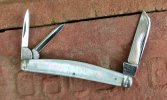
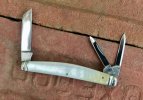
Any idea how to estimate when this was made?Thanks Dave!! I guessed that, but I couldn't be sure!! Probably made by NYK - a "secondary" brand for them for a while!

Goins say 1910 to 1920, although NYKC didn't go out of business until 1931. I had one the same, but, it seems to have gone awol?Any idea how to estimate when this was made?
Promise I bought this one fair and squareGoins say 1910 to 1920, although NYKC didn't go out of business until 1931. I had one the same, but, it seems to have gone awol?

Thank you kindly! I should say while these blades were aggressively de-pitted and un-patina’d, ground and sharpened by previous owner(s), the action is pretty great on this knife, especially the very snappy secondary.Electric knives marked “Walden” were produced in the New York Knife Company plant as a second line to their now famous “Hammer Brand” Knives. The Electric trademark was used until about 1920.

 www.heinzhistorycenter.org

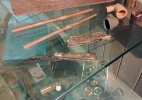
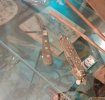
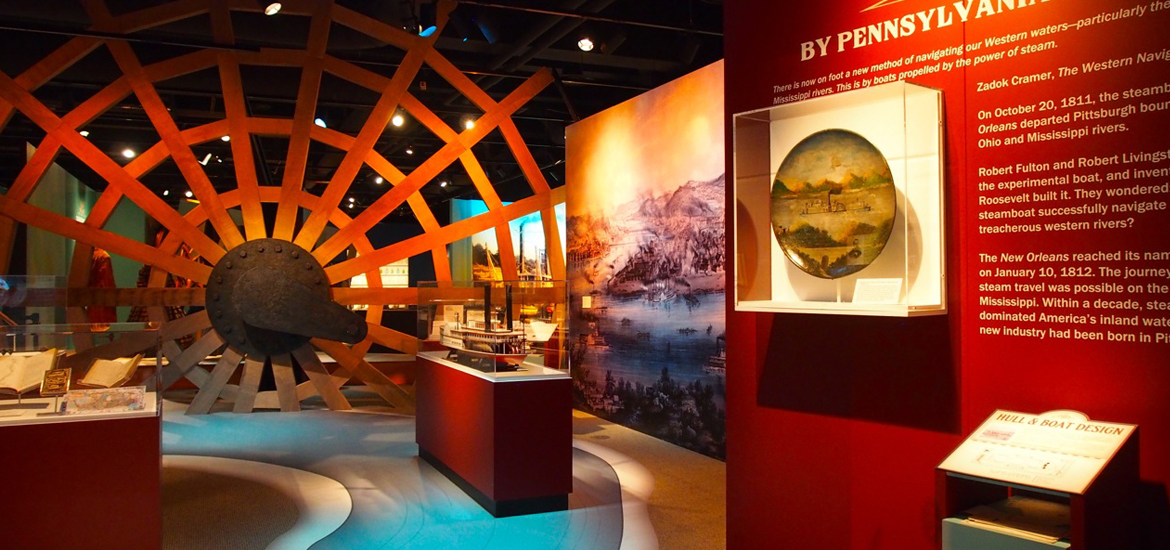
How cool! I've seen the pics of those original knives recovered. How I'd like to get few hours with them, with a camera, ruler, and note pad. Such a gathering of different patterns and constructions virtually unused and in one place.I went to the history center yesterday and they had a display called the treasures of the Arabia. The Arabia was a steamboat that sank on the Missouri River in 1853 and it was later discovered in the 1980s in a Kansas cornfield. The Missouri river had shifted course
Anyways, the pictures are through glass and not all that great but you can see a cool wharncliffe swayback jack and a great stag knife with what may have been a corkscrew on the backView attachment 3193263View attachment 3193264
You can read about the history and original exhibit here
Pittsburgh’s Lost Steamboat: Treasures of the Arabia
Travel back in time to when Pittsburgh was the Gateway to the West with the History Center’s new major exhibition, Pittsburgh’s Lost Steamboat: Treasures of the Arabia. By popular demand,…
Absolutely! Sorry the photos are not that great, the glass and the lighting made it difficult.How cool! I've seen the pics of those original knives recovered. How I'd like to get few hours with them, with a camera, ruler, and note pad. Such a gathering of different patterns and constructions virtually unused and in one place.

What a cool find,I can tell you put a lot of effort into finding these older gems,Good on You and for taking the time to share it.So earlier in this thread I posted 2 English whittlers marked J M Smith York. Well the man I got them from just sent me these 4 fancy corn knives with the same mark in their wrappers. The Corn Knife inlay seems to have some silver metal in it, never saw that before? Handles are genuine ivory. Very cool knives. View attachment 3185840View attachment 3185841View attachment 3185842View attachment 3185843View attachment 3185844View attachment 3185845
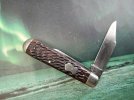
Goins say 1910 to 1920, although NYKC didn't go out of business until 1931. I had one the same, but, it seems to have gone awol?
 this one came down through the south Saskatchewan river into the Saskatchewan river down to lake winnipeg then found it's way to selkirk via the red river,so my quis did you happen to lose it near the south Saskatchewan river.
So that is why I can't find it. Thanks for posting that one and reminding me,Oldy .
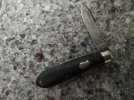
Worthy of a thread!!!I love finding the more obscure cutlery names.
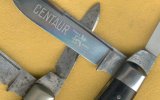 Another obscure name; CENTAUR!!!
I always love seeing the W.D.Herbet R8shell.I love finding the more obscure cutlery names.
Herbert and Holler:

Howard and Jones:

Peters:

That's a beauty Charlie.Worthy of a thread!!!View attachment 3194672Another obscure name; CENTAUR!!!

 If ? it is the same company, there is nothing else in there for us to further a search down any other small corridors within the story. If not? sorry to waste time.
 www.facebook.com
 Campbellclanman
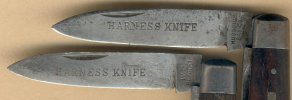
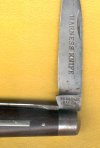
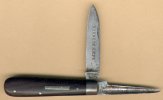
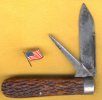
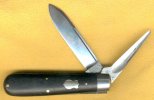 Campbellclanman
That hudson bay company knife is something I have never seen before which is strange since the Hudson bay company played such a significant role in the early days starting as ruperts land and then becoming canada,my great great grandfather came over to work for them in the 1700's.Thanks for the links, Duncan!!
My HB is the only folder I have seen, and some suggest it was a contract knife from Boker!! The punch looks like a Valley Forge!!
I know nothing for sure!!View attachment 3195081
But not this Valley Forge!!View attachment 3195084
This one!!!!

