To be honest, I debating even responding to this comment at all, since it will likely turn into a rather long conversation, but I feel like some things really need to be addressed here, so here we go...
I'm not big on straight up calling people out, especially Platinum members and given that I'm relatively new, but this whole post was insane, fact ignoring, assumptions-stated-as-facts, fanboy BS. There were several statements made as facts that were either blatantly untrue or that you obviously could not know.
I'm going to discuss this part first, admittedly out of order, so that we can get a few things out of the way first:
1. I don't know you, and you even admit to not being here very long, so trying to "call me out" isn't going to be something that is received very well from my end, especially when you're using rather aggressive and frankly downright rude ways to describe my post.
2. You claim that I don't know several things in this post, but rather than try and find information to contradict me, or even simply asking for sources or reasoning for my claims, you immediately mark it as "fact ignoring", "assumption-stated-as-facts" and "fanboy BS"...the smell of hypocrisy in the air is strong.
3. The fact that I am a platinum member here shouldn't have too much bearing on how we interact. In fact, I try to treat everyone here with as much respect as I would hope to receive from them, being fellow enthusiasts of the same hobby. That said, you have obviously failed to show me that respect, and have "called me out", so here we go.
I would think combat situations could include some VERY brutal forces on the blade. If you're in a fight for your life, you're going to be putting everything you have behind that knife, and likely hitting bone. Given that, I don't think the OP's test was fantasy.
Yes, a combat situation will put strain on a knife, but not in nearly the same way that batoning through wood will, obviously. Unless you plan on bludgeoning your attacked to death with the spine of your blade, the forces experienced when in combat will be VASTLY different from the repeated wacking of the spine when batoning.
These different forces are handled differently by different locking mechanisms, depending on what the mechanics of the mechanism are.
In this case, the Axis Lock handles the impacts rather well, as the forces of the impacts are only going to further force the lock to stay in place, while a framelock, which is by NO means the strongest locking mechanism on the market, will usually fail from repeated impacts to the spine because it will either cause the lock face to deform (in the case of a traditional titanium framelock), or it will likely slip and close because of the intense vibrations or repeated impacts (which is what we see here with the steel lock insert, as it prevents the lock face from deforming).
Not only that, but the forces being applied when batoning are going to be in perpendicular to the spine of the knife, and therefor will be hitting the lockface at an angle, furthering the possibility the lock will slip.
While this test does give you information about
some aspects of a knife's performance, it will not be a good test of a combat situation. If that is what you were after, then you should try stabbing and slashing a target that is a good approximation of human flesh. For this, a pig's carcass, or perhaps some ballistic gel are good analogs if you have them.
When stabbing, all of the force of the impact is going to be directed into the lock face directly perpendicular to the interface between lock and blade, so the force is much less likely to cause the lock to fail, and the physics involved are very different then batoning through wood.
When slashing, the forces will be applied in the opposite direction of when batoning, onto the edge of the knife, so there will be no additional strain on the lock face, but rather on the stop pin, making the lock rather unlikely to fail.
Do you have ANY information about how BM heat treats 154CM, or how ZT heat treats Elmax? I doubt it. This is straight conjecture stated as fact. And then you talk about Benchmade's INTENT when designing the blade versus ZT. Do you work for EITHER?! This is an insane statement. Also, the tip on the Griptilian is NOT thicker. I measured. The ZT is thicker!
And this is what I am talking about when I say that there is some hypocrisy in the air here...
Now, while I do not have the actual heat treatment formulas for each company in front of me, I do know the hardness that each company aims for when they treat their blades, and the general properties of the steel involved, so let me explain this for you:
1. BM heat treats there 154CM with a target hardness of 58-60Rc when they treat their blades, and in my
experience
through the information I have gathered on this forum, their steel tends to be a little bit more to the middle-lower area of that, around 58-59. This gives 154Cm a little more toughness in general, at the mild expense of the edge retention. It also makes the steel a little more flexible, and able to take flexing and prying a little better.
2. ZT heat treats their elmax a little harder than BM does their 154CM, taking it a little closer to 60-61Rc, and I have seen several measurements on their Elmax showing that it tends to be closer to the 61Rc mark on that scale than 60. You can look them up for yourself if you want to try and argue with me at this point, since I honestly don't care enough to put the time in when you won't give the courtesy of doing the same.
And I don't speak for BM when I talk about their intent making the blade, but it is pretty obvious from the design and the marketing they do for the Grip that it was made to be a good, general-purpose, all-around knife, and it does that very well in my opinion.
And the 0620 in question here by ZT was designed by Ernest Emerson, who is very well-know for designing combat-style blades, and has his own company, Emerson Knives, that does just that. The wave feature, which is featured on the 0620, is also designed to make opening the knife in an emergency situation as fast as physically possible. While Emerson designs certainly can be used for EDC, and many people do that all the time, they are actively designed with the potential for the blade to be used as a weapon, making the intent of the design rather damn obvious if you ask me for that one.
I might not work for BM or ZT, but I do a lot of research, both here and with my own hands, and I have a lot of time put into this hobby, giving me a good amount of information to pull from, which is more than I can say for you. You seem to prefer baseless claims, and instead of correcting what you think is an incorrect statement, you only find it necessary to say I'm wrong, without any contraditory evidence to back up YOUR OWN claims...
And either way,
neither blade was made to be a bushcraft knife. That much is obvious to anyone with a pair of eyes any experience with knives.
And if you measured that the ZT has a thicker tip, then that;s fine. I am willing to admit that I am wrong in some areas here, but may I ask where you measured, and if you measured just the very tip, or did you take into account that angle of the grind on both tips and the amount of steel supporting the tip in each? Because I am fairly certain that the tip on the Grip is more obtuse, and therefor more reinforced to handle prying, than the ZT, which has a more acute and gradual grind on the tip, so that even if the actual termination of the tip is thicker, there is less steel supporting the tip, and it is more likely to fail because of that.
And lastly for this part, calling my statement "insane" is both an incorrect use of the word, and frankly incorrect. Even if my statements are incorrect, they are not be any means "insane". I would suggest getting the dictionary out and looking what the definition of insanity is, because it certainly does not apply to what I have said.
...this response is too long so I will post the second part shortly...


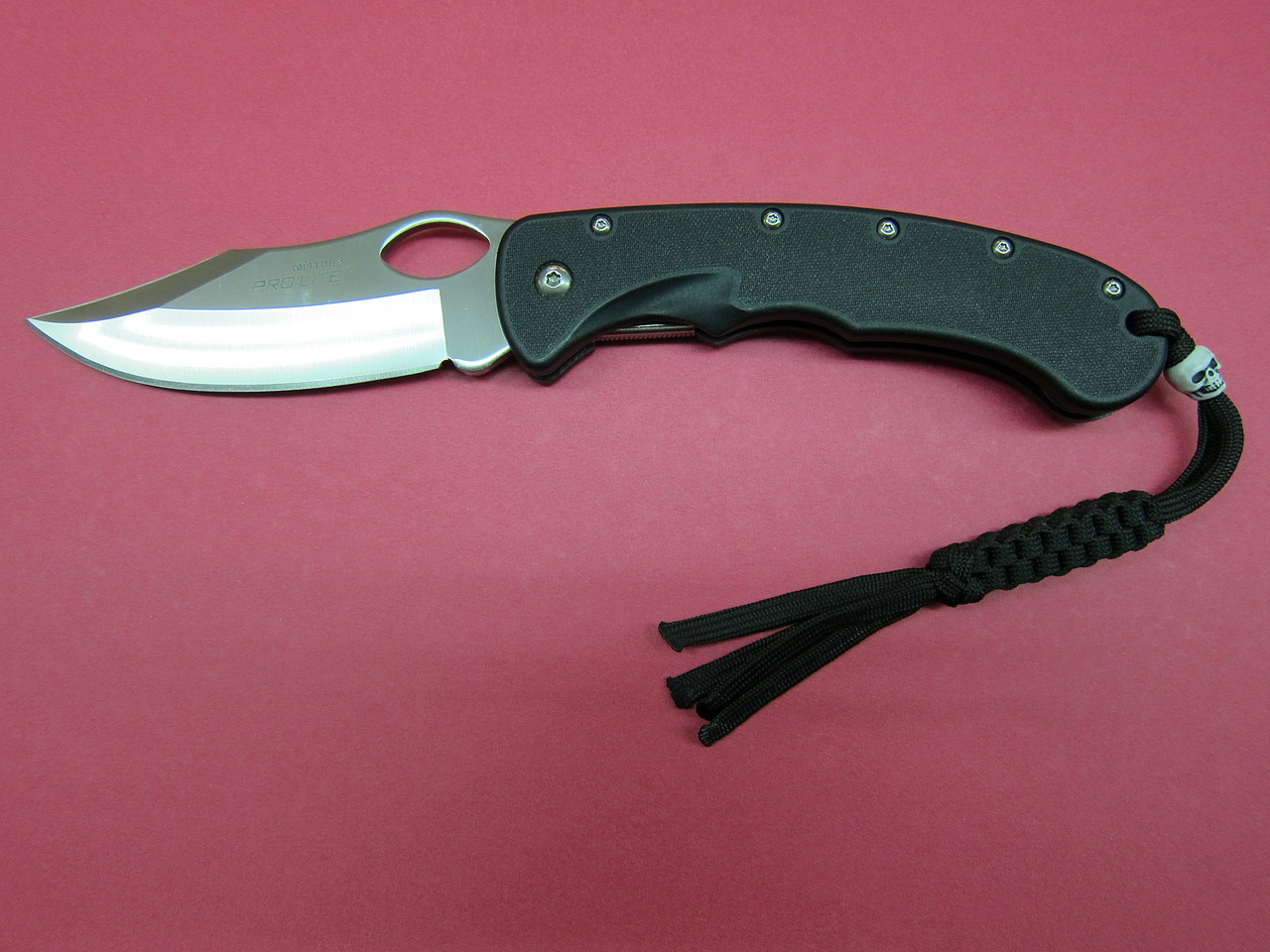
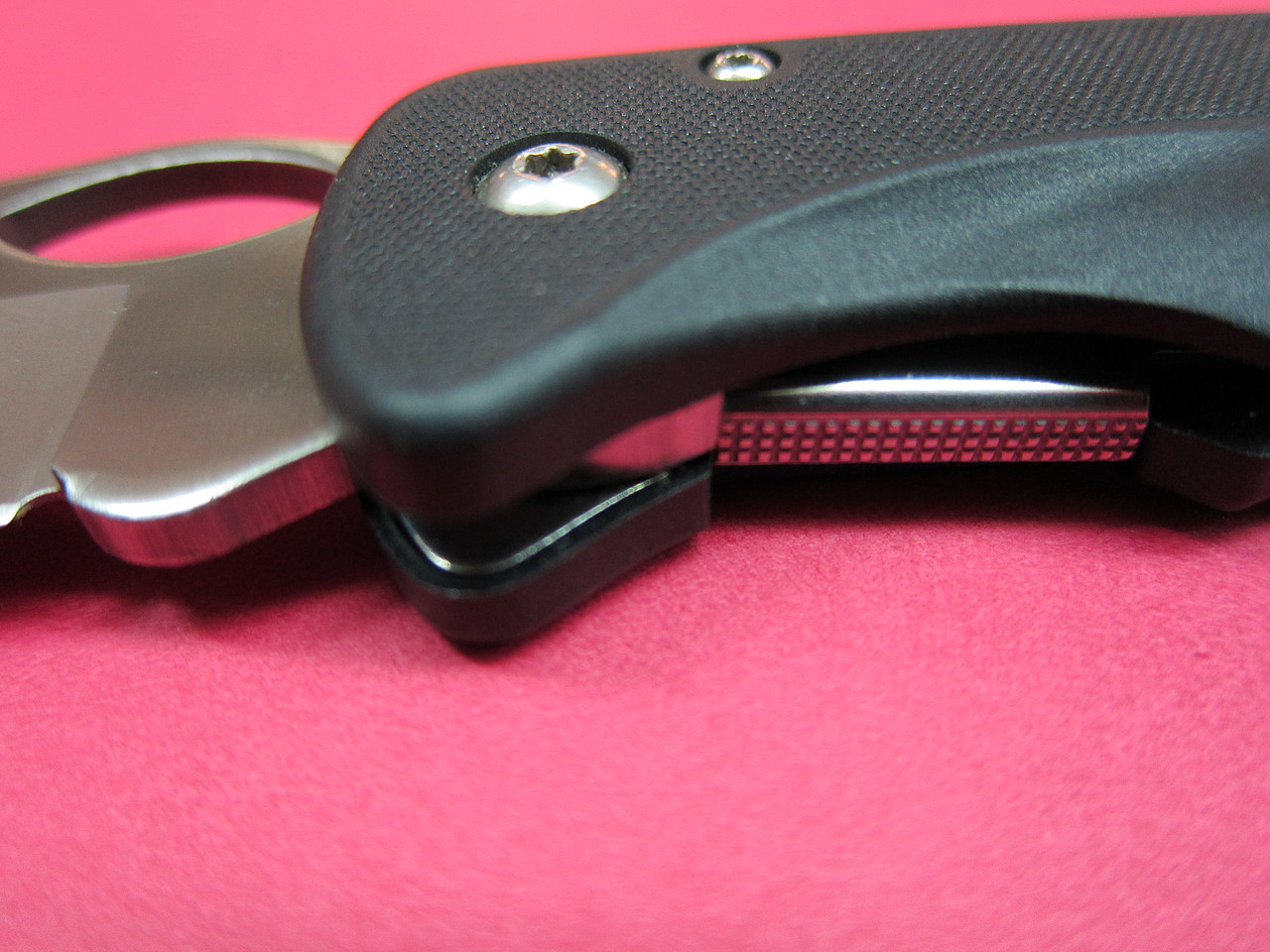


 That my friend, ^ is a perfect example of: "myopic!"


