- Joined
- Jul 28, 2006
- Messages
- 3,953
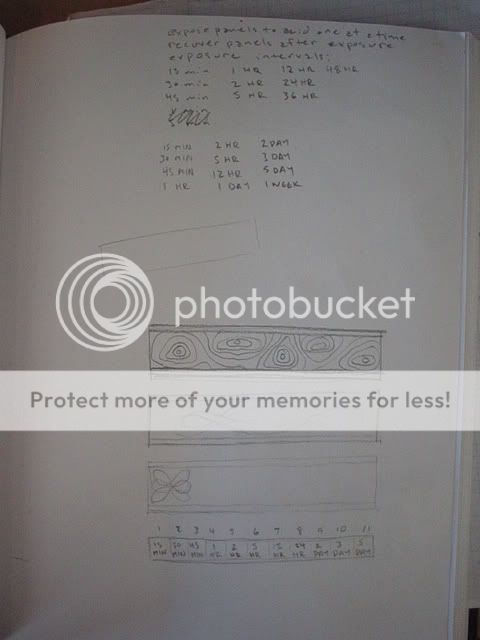
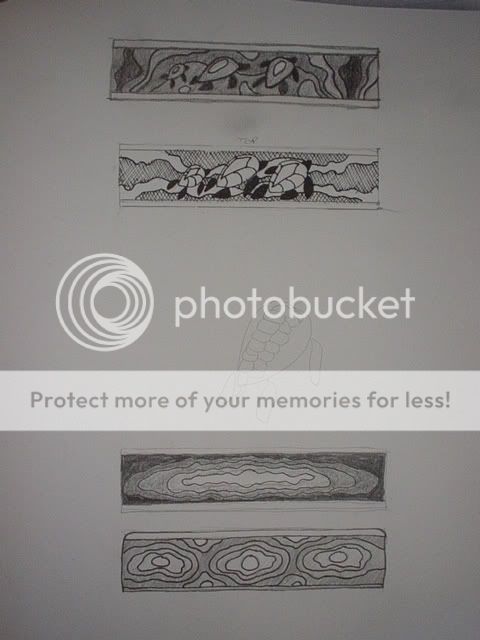
Lorien, instead of a drawing of a ninja turtle on there how about doing a stylized tortoise shell look? you know how the plates of a shell look?

The BladeForums.com 2024 Traditional Knife is available! Price is $250 ea (shipped within CONUS).
Order here: https://www.bladeforums.com/help/2024-traditional/
America has reached 250 years, and I am grateful to be here, in the best country in the world. Thank every one of you who helps make this country a better place, those who have gone before and risked it all, and those who've paid the ultimate price to make the United States what we are today.
Happy Birthday America! Let Freedom Ring for all time!


Lorien, instead of a drawing of a ninja turtle on there how about doing a stylized tortoise shell look? you know how the plates of a shell look?


A couple of filing tips:
Your grind line should follow the cutting edge. That way you maintain the same bevel/angle all the way from the ricasso to the tip. A change of angle becomes very visible when the blade is polished. I scribe this line into the steel with a scriber. Take care not to go over this line, it is difficult and time consuming to correct.
I use a chainsaw file for setting the end of the grind at the ricasso. Unlike the rattail files, it is straight and gives you an even radius. This generally looks better, and will make for easy sanding. I file this groove to about 90% depth while the blade is still flat. This gives you a defined starting point for the grind line. I blend in the remaining 10 % while filing the flats. This will prevent the little dip that that can result when cleaning up this area.
When filing the actual "grind" file the entire blade length in one direction. Place a light perpendicular to the file marks, this will make the file marks show up white. To ensure your file work is flat, file the entire blade in the opposite direction, your file marks now show up dark. This will show you any areas that may need correcting.
Until you are experienced enough to feel what your file is doing, lay the file down on the area you are filing and make sure it is laying flat. This will help to maintain the correct angle. This is a little difficult to describe, hope it makes sense.
Filing from left to right will remove material faster, but results in coarse file marks. Always finish filing from right to left. Make sure that all the final file marks run in the same direction, meaning that all previous file marks have been removed. It is a good idea to do this for all the work, since random file marks make it difficult to determine what you are actually removing. It will also make the initial sanding much easier, since you will only have to sand in one direction to ensure all file marks have been removed.
Wolfgang
 . No physical work done to the knife, lots of bike repairs though...
 )
)Cruel? Perhaps... not for me to judge.
Lorien, if you take that file and chunk of stock and make a decent blade out of it, I promise you won't regret it. You will remember the sore muscles and the goofs you WILL make and you'll learn a lot about blade geometry once you get it finished and heat-treated and beat the dickens out of it. That, friend, counts as "paying your dues", even if you never attempt another project.
If you decide that kind of work isn't for you, that's fine too! If everybody made their own, where would us knifemakers be?
I'd really really really really make a sen. Did I mention making a sen?
Have fun. Keep that one sell the 20th you make
Loren one good thing about making a knife this way, especially your first knife, the mistakes you make are going to be slow ones.
Lorien, here's a free tip for you. You'll go through fewer hacksaw blades and files if you remove that gray stuff on the outside of the bar first.
On the other hand, if you want to enjoy learning all the fine points yourself, forget I said anything.
I'm looking forward to seeing the finished product.
Canadian hacksaw resistant
Phillip.... shouldn't the new guy learn what that "funny black stuff on the steel" is on his own?
Lorien, vinegar works also if you don't have acid.
Be careful Lorien, this stuff is very addicting
if you use the draw file method, be careful when you start to get an edge so you dont slice your finger. to keep from getting cut, cut a slot in a small block of wood and fasten it to the file between your hand and the edge. use chalk to keep the filings from loading the file up.
No wonder your shoulders hurt! That freaking vise is pretty high. My vise is a little over waist high. If I want to raise it I actually have 2 barstools of different heights that I sit in depending on how I want the vise positioned.
I've got some 2000x paper for the final finish if you want me to send you some.
Lorien, as per our conversation, here are some pic's of the home made scribing gage.The body is 3/8" thick and measures about 3/4" X2". I simply drilled and tapped for set screws for adjusting and tightning the bar and scribing pin. The scribe is an old sharpened dental burr, but a sharpened drill bit will work. The round body piece is drilled for the adjusting bar, I simply switch the bar and screws to this one for scribing in tight curves, which can not be followed with the rectangular body. Steel will work best, but brass would do as well, would just not wear as well.
Wolfgang
Yep, 1084 is just full of eutectoids, that's what makes it a great steel. Now to take full effect of the euctectoids you need a special molecule smooshing hammer (please pardon the technical jargon and I just so happen to have some molecule smooshing hammers for sale). Using the special hammer to break the eutecctoids into smaller molecules is the key to getting a sharp edge.
Sorry....
Joe, you missed my "tang stretcher" comment in post #94.
The ninja monkeys are on strike. They're not happy with me hitting metal poles with their almost completed workI'm having a crate of bananas delivered tomorrow.
Looking great.
Hey Ding Dong, you better not send that to me for heat treat with a handle glued on it!!!
It's coming along really well Lorien
(glad you didn't need any guard shoulders filed in.... ROFLMFAO
If you decide to put fullers in it, you can rough it in with a dremel tool, but to get them really consistent and smooth... You'll need to make a tool to clean them up. It's a lot like the sen that Will mentioned. You'll want a HSS square ground tool bit that's the same width as the fuller you want.
You can get HSS square tool bits from just about any tooling supplier (MSC, Enco, Travers, etc.)
You'll have to grind the end of it on a bench grinder to the radius you want your fuller to be.
Rig it up like an edge scribe so that you can drag it along the spine, or a fixtured plate, or some such thing, and get a repeatable motion.
The HSS will cut into soft 1084 like butter.
maybe so easy even "monkeys" can do it

 Late May? after the sentence. If you didn't know it was a joke I'm selling my special molecule smooshing hammers at a good price
Oddly smaller than I envisioned though. The camp knife blade is only 3 inches long!!!
I've had thirteen hour days at school this week so far, but I'm going to get them ready and headed back to Canada asap.
And, I can make them from roofing tar!