First knife build need help

The "big knot" at the front of many paracord wrapped handles is called a Turk's Head Knot. It isn't hard to tie once you practice it a bit. You can tie it on a broom stick and then slide it on the knife and tighten it up. There are dozens of tutorials online for it. Using a paracord wrap does not mean you can't use a metal guard. Just don't use the Turk's head.
A search for paracord wrapping will find a lot of tutorials for making the wraps. Some are super simple, and some complex. One of the guys who used to hang out in Shop talk came up wiyh a knife wrap he called the "JT Wrap" He put up a great tutorial. I don't recall if it is in the stickies, but you should be able to find it.

I would not bother to try that gut hook idea. Think about the use of a gut hook and the problem with the blade edge being in the way.

What really does work for a gut hook is taking a piece of 1" X1/8" bar stock and making a dedicated gut hook. It is just the hook with a simple handle on it....no blade at all. It can be made as hard as desired, since it won't get used for any abusive cutting. The last one I made like that was in 1/16" CPM-S35VN. It was like a hooked scalpel blade. It was the partner to a 3.5" blade hunter/skinner.


Learn to embrace leather as a sheath material. Done right it is very tough and can be downright beautiful. Every field use knife should have a sheath. I do not like Kydex.
On great thing about getting into leather sheaths is that with about $50 in supplies you can make four or five really nice sheaths, The supplies will last for many more knives with only the purchase of more leather.
Get ( Jantz, and most other knife suppliers all carry these items, as well as places like Tandy):
1 bottle of Leather Weld ( Eco-Flo) glue
25 yards of black nylon hand stitching thread
one pack of size "0" hand stitching ( harness) needles.
one 12X12" sheet of 8-9 oz. veg. tanned leather
one bottle of Fiebing's Oil dye ( alcohol base) ( brown or black is best to start with)
one pack of wool daubers (for the dye)

Tools you probably already have:
Small blade very sharp knife. (A sharp wood carving knife works well.)
Wooden mallet ( not required, but nice to have)
Pair of needle nose pliers ( for pulling the needles through tight holes)
Stitching awl ( you can make a good one from a bicycle spoke and a piece of wooden dowel. Make two - one very sharp and one blunt tipped. Use the sharp one to punch holes, and the dull one to pull stitches tight.)

Reading and research:
A book or two on leatherwork and maybe one on sheath making. Check the local library, you would be amazed at what they have in this area. Netflix probably is a bonanza, too. Online info and tutorials will also be good sources.
Check out the sheath forum here and some leatherwork forums.
Understand about welts, saddle stitching, and all the assembly steps before you cut any leather. Making a cardboard template from poster board or shirt board is a good idea. Mistakes in cardboard are free...mistakes in leather are costly.
START SIMPLE. Make a very basic sheath with a welt to start. Get fancy when you have all the basic sheath making skills down pat. A sheath with a belt loop for a 4-5" blade uses about a 12X3" piece of the leather.
 
What about doing a more block like sheath out of wood with a nylon retaining strap to keep the blade in place when not in use? Two main reasons I'm wanting to stay away from leather and kydex is price and comfort of use for my knife. I can work wood like nothing and have messed around with a wood sheath for an old knife I had. That and I know it's ridiculous but I am extremely OCD about my outer gear matching color wise and know if I made it out of leather I'd probably leave it at home. Another question about the hidden tang. Are you talking about a more pin like handle or just slimming up the original design to allow more wood around the edges but still pin it? Thank you again for the advice bladsmth.
 
The gut hook would have to lock into position as you drew it and would (as Stacy pointed out) be an issue due to the sharp side of the knife. A lot of little fiddley complicated issues... On my website you can see my personal camp knife. I did a guthook on the back of the blade near the tip. It worked, but the sharp blade looking up at me was an issue. Went back to dedicated hook and use that for cutting paracord and the like now...

I have worked wood for ages too. Come from a line of carpenters dating back to Jesus... But haven't done a wooden sheath. I use leather and kydex almost exclusively. And lately have started combining the two. Kydex inner with a leather over. Soon will be posted my latest. EDC recurve with a microsuede lined kydex inner and leather outer. Leather can be worked to any shape and even hardened chemically to be very stiff. It can also be dyed almost any color. I also like my gear to match. Hence a matching sheath, holster, mag and cuff pouch etc for plain clothes stuff...

Leather can be bought fairly cheap and so can the tools. If you want to go "high speed low drag" and high end with the look and feel, buy thinner leather. Use 4oz instead of 8-10oz and glue up your pattern back to back with two pieces of leather. Makes it 8oz total and gives a clean skin side inner for the knife to ride on. (It doesn't present the unfinished side of the leather to the viewer at any angle.) You can als do contrasting colors this way. My mentor does his this way and I am switching to it. It is an awesomely clean look...

Thanks for responding Stacy. I knew you were the man for the job when his design started leaning your way. ;)

-Eric
 
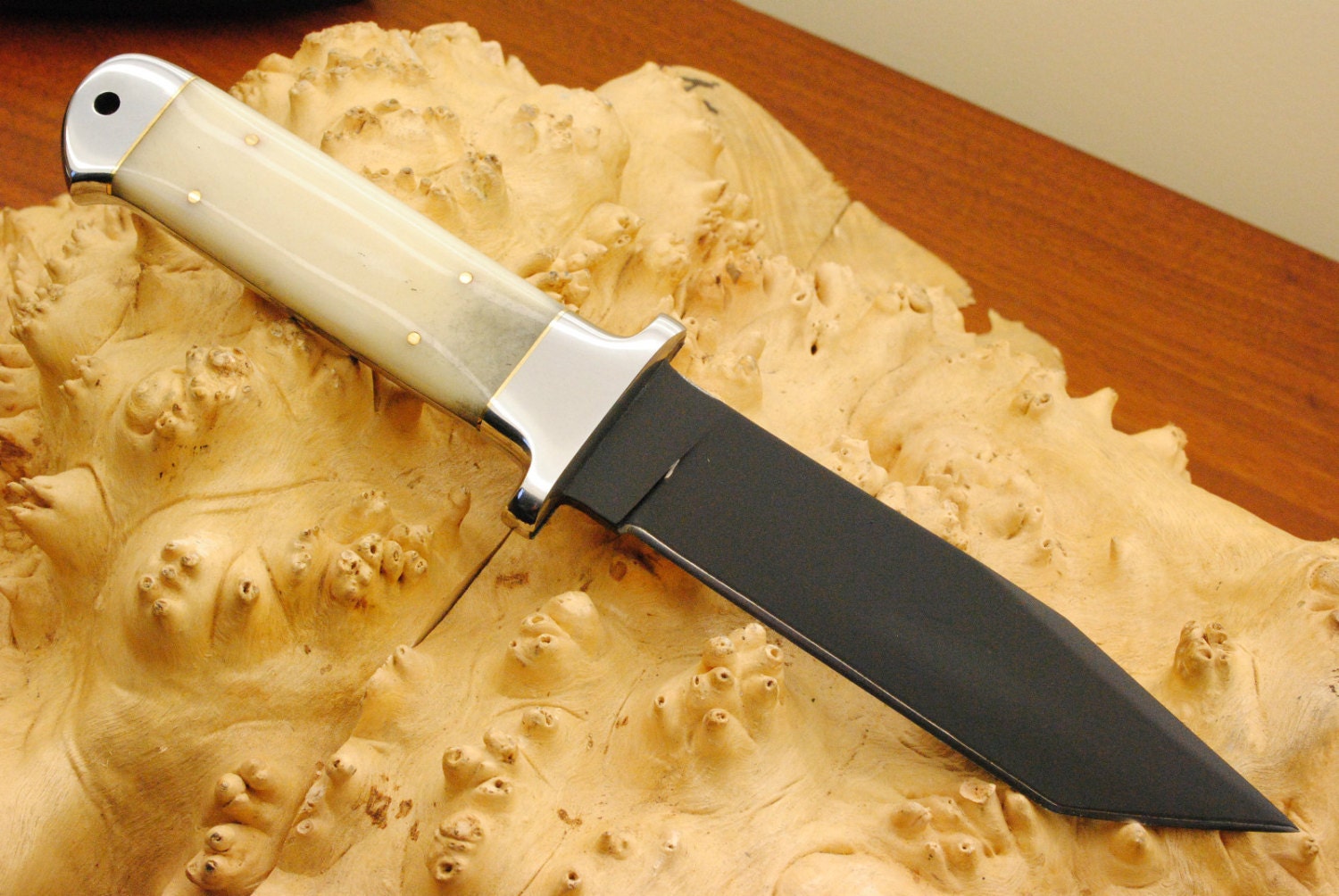
This is the shape for a quasi-tanto that would work well as a fighter or edc type blade IMHO. Look at the blade shape, and disregard the bolsters and handle a bit. They look great but for EDC purposes would get in the way a bit I think. For a pure fighter this is an excellent design.

il_570xN.409450346_645s.jpg
 
I see what your saying with the leather. My only thought is wood seems a little easier to work to me. And yeah for the camp knife I'm thinking along the lines of the one you posted still keeping the design of the original somewhat but making it a little wider and aiming for 8-10 range. Might end up making the blade flat for the most part as it will just end up as a wood splitter for the most part. Figuring a light weight saw would be my best bet for cutting in the woods. I think the biggest help would be more so why not to go with wood.
 
Last edited:
I make an ultra-lightweight saw that's easy to do BTW. Take a large sawzall blade for wood and make a handle to fit it in. Use wingnuts to secure it and space the slot so it can be bolted saw side in when 'folded' up.

Don't follow the herd and do a scandi grind thats only a 1/2" deep up the blade and flat for a body. There is an egotistically misaligned (and banned) maker who's name is sort of like 'shrubbery primate' who makes a bunch of those. I know for some reason the sell, but they are the most worthlessly uselss POS blades I have seen in a while. Waterjet cut too nonetheless. Do a nice shallow flat grind or a gental convex. It will still split wood just fine and can still do the other chores while being plenty strong...

-Eric
 
How wide should I aim for for the blade? And can a leather sheath be made to mount on a backpack strap/ shoulder harness?
 
Last edited:
Wideness: For which blade? The camp knife or the tanto?

Yes, it is fairly easy to mount to backpack straps. Either make your loops verical or horizontal to accommodate the desired strap and make the loop small enough to not have play. Or use a system like the blade-tech locks which have a width adjustment to them.

-Eric
 
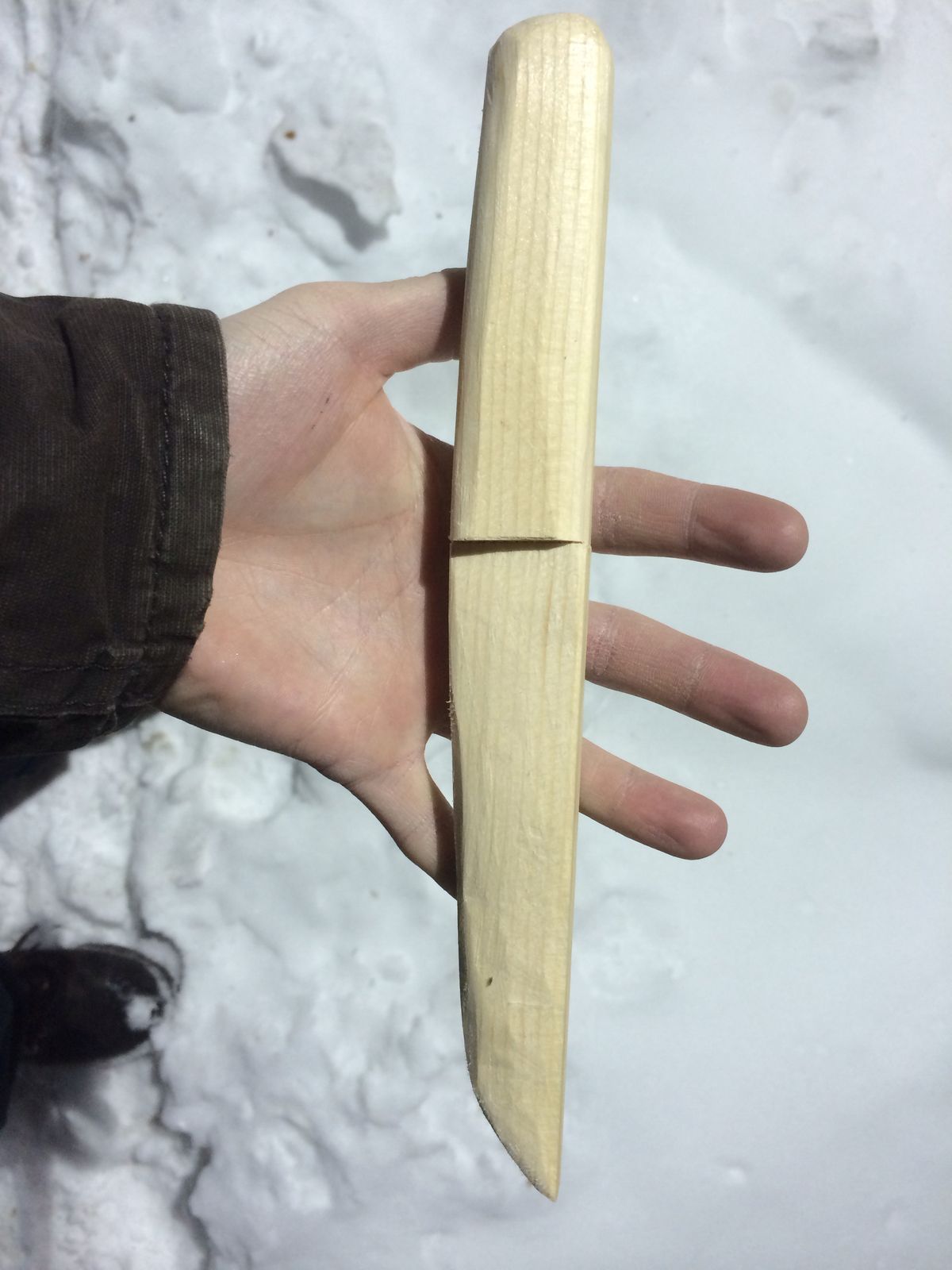
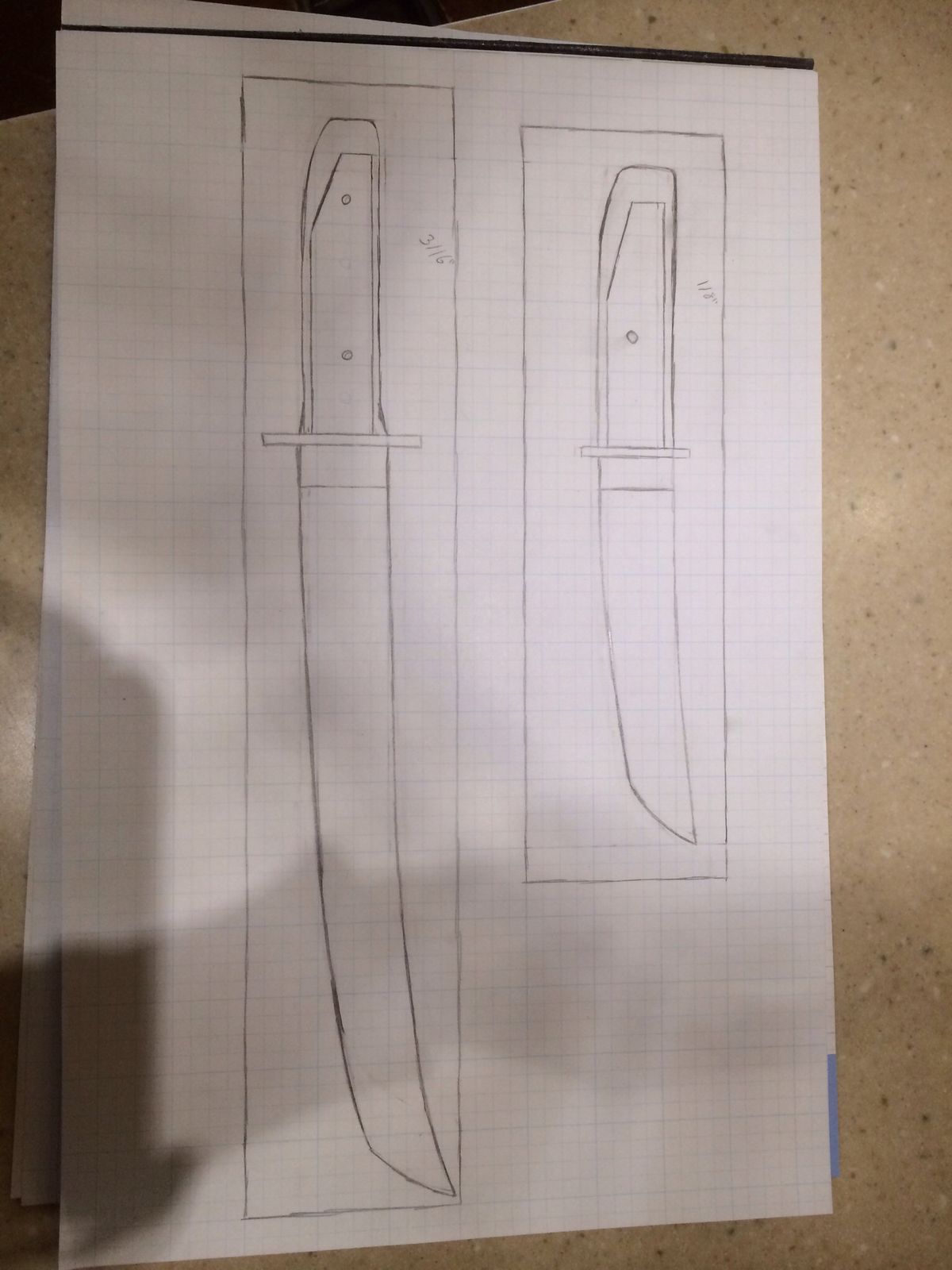
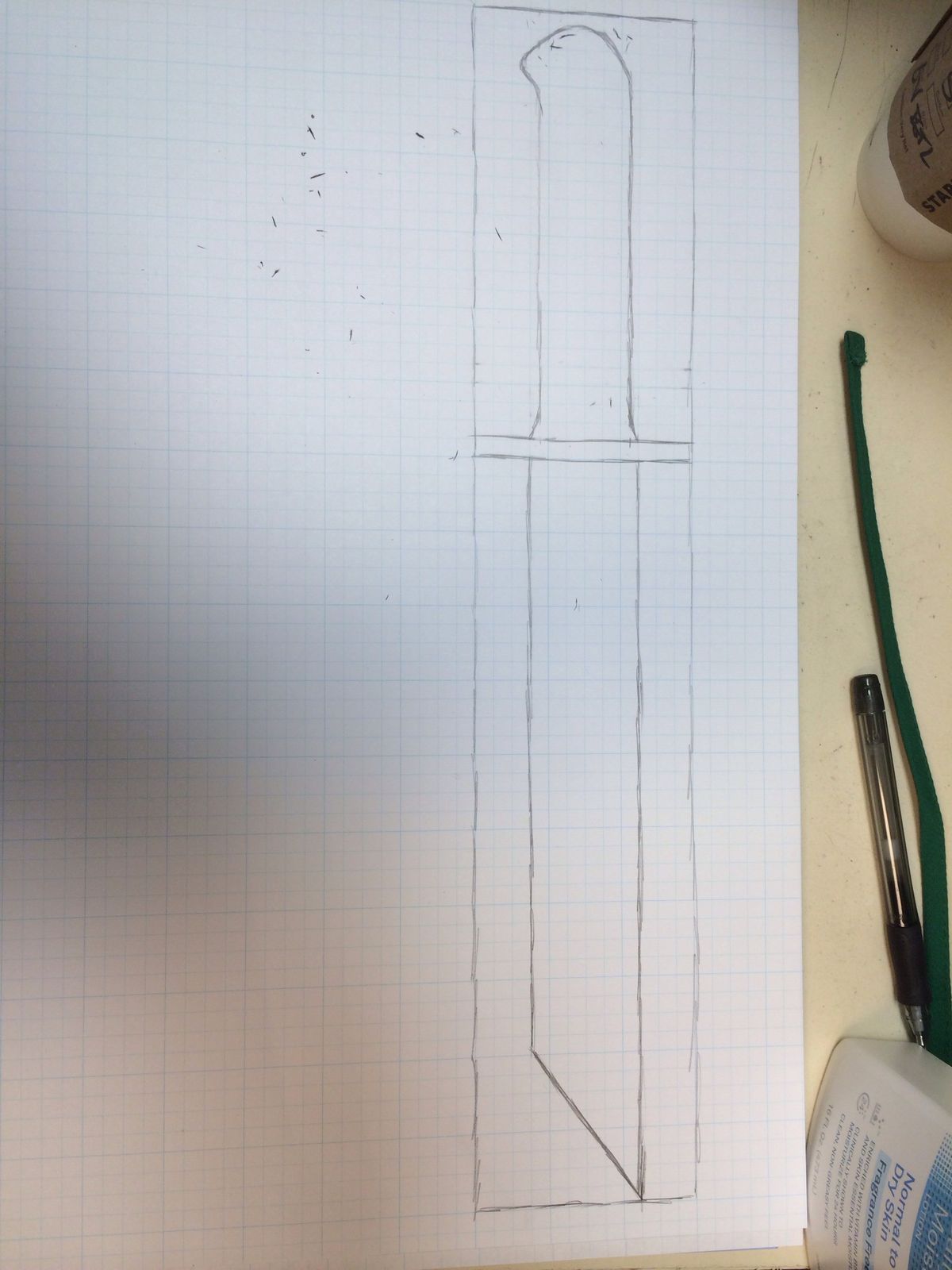
Steel will be here tomorrow so it's time for a last poll. I will be doing the smaller knife from beginning to ht before I start the second one so I'm not sending out twice. First picture is the mock up for the small one, the second right is the same one but with the curve extended upward a little more. The second left is the match to the utility just a bit bigger to allow for splitting and the final picture is the chopper/camp knife with a straight blade. Thanks again guys
eef52564b7b69276b35d21d8c97f8024.jpg
4205d04ee4a2ab4c6b589f27ca116432.jpg
aa0607e16ef9e86fb9f5b64d27294386.jpg
and any tweaks to improve a design are more than welcome :smile:
 
Last edited:
For a camp/outdoor type knife, I like a wide blade with a long, as close to full as possible, flat grind. Usually I am near 1.5" in width on that sort of knife. It allows the spine to remain thick, while still having a slicer of a thin edge. If using for any food prep, it works a lot like a kitchen knife. If pressed into skinning or filleting fish, the thin edge glides between layers. Width can allow you to scoop with the blade as well, whatever material you are cutting...

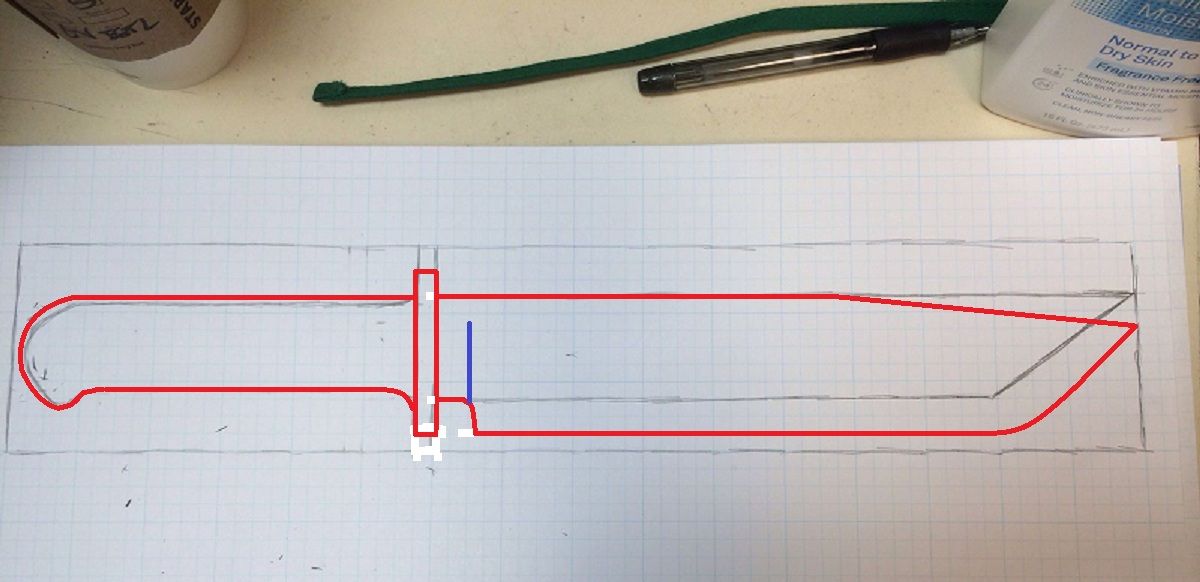
Since you are going with a tanto profile, I made the following changes. I hope you don't mind. With this, the bevels would begin on the front edge of the ricasso where the blue line is. This allows the blade to be used on a flat surface, as well as not degrading past the lower line of the ricasso after repeated sharpening. I shortened the guard, as a long guard looks great and has a place on a dedicated fighter, but just gets in the way on any knife that will be used a lot. If it is left at, or preferably higher than the blade edge, it again facilitates the blade being used on a flat surface. With a long flat edge like that, making any long straight cut is as easy as setting the blade down and dragging along the line of the edge. I also made the level of the backstrap and the top of the blade the same. This is just an aesthetics thing with me, whether hidden tang or full, I prefer if they match... With a bit of a clip point it reduces the amount of flat you have at the front of the blade. A long flat nose, even when at an angle and coming to a tip, is fairly useless IMHO. A bit of belly, (the curved Japanese style of tanto etc) I find far more useful for making cuts than a long flat. It allows pressure to be concentrated on one spot, rather than spread out. Any curve in a blade allows the cut to have some lateral pressure as well as direct pressure to make the cut. Thus, the blade goes through the material in a progressive manner, rather than all at once. In other words, it cuts faster and smoother. A bit of point never hurt either, just in case the occasional feral pig decides to visit your shins... :)

Please excuse the crudeness, and the rather odd butt on the knife. MS paint wasn't cooperating with me this evening...

602cb5a0155680d63f7c84009bd6c266.jpg


It is cool to see how your project has changed and progressed as you have made models and played with them.

-Cheers!
Eric
 
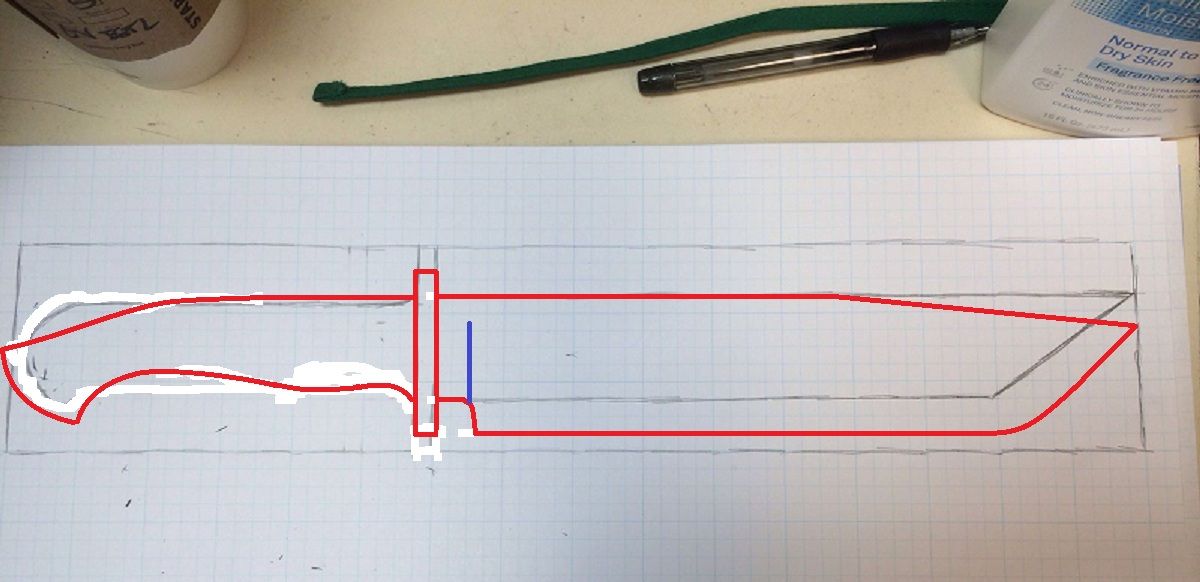
Now, bear with me on this... It is a bit odd... But I would truly like to see something like this below. I can't quite get the curves on the finger side of the handle right with MS Paint, but just imagine a more classic bowie style handle. Flared at the rear, thin near the ring and pinky fingers, wide on the middle finger and flat sided into the guard with just enough curve for the forefinger to sit in. I don't know that I have seen a larger tanto style blade with this ricasso to blade, guard and handle treatment. It is leaning into more of a classic fighter than a camp knife, but I still think it could be cool. If you don't go that way, I might just steal it if that's ok...

e59f73c03434f383b6dd53e6bc2fab78.jpg


-Eric
 
So if I'm understanding you correctly the curve of the mockup is what I should aim for on the chopper as well? Sorry if that's not what you meant I think I'm hitting my overload point trying to absorb everything I'm learning and design the blade lol:hypnotysed::hypnotysed:

Edit: ok now I see more what you mean. And if I go with it or not I'm sure your make on it would blow mine out of the water. Also the colors I'm going with will be similar to the kelty pk50 backpack. And was curious if you can attach nylon to leather or if it's possible to get colors like that from leather? Well my heads about to explode got a few ideas to sketch and bounce around. I'll sketch them later today. Thanks again
 
Last edited:
You can get that color green from leather fairly easily... The green at least. Grey is a color that doesn't seem to do well on some leather. Lighter leather, maybe... And yes, you can connect nylon to leather. Either via rivets, Chicago screws, or even sewing with heavy thread avoiding going too close to the edge of the nylon...

And don't just assume mine would blow yours away, I have seen some astounding stuff from some new makers lately... And I still have my f-ups. I just don't take pictures of them... :p

Cheers!
 
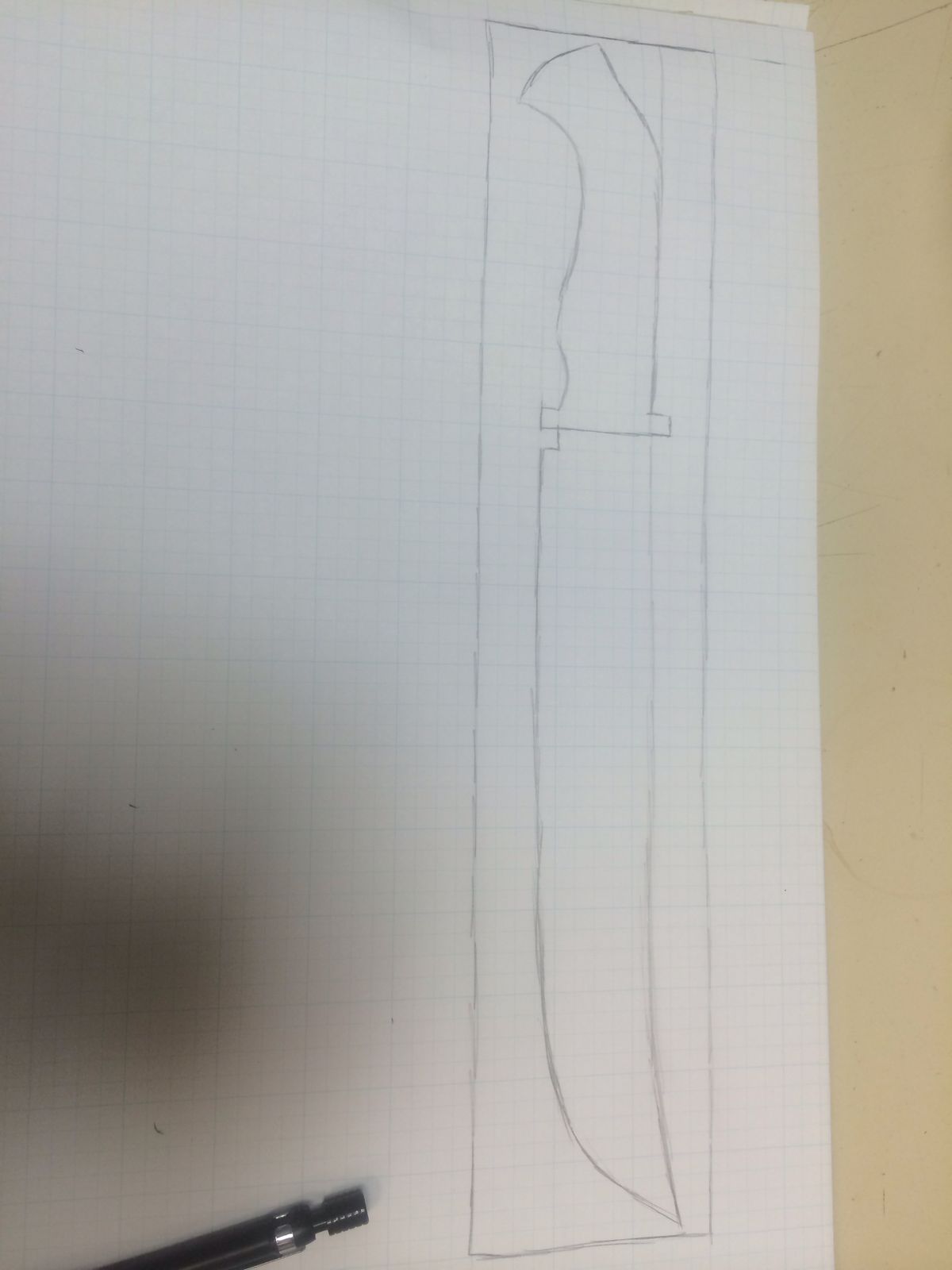
What about something like this? To still kind of keep with the matched idea. Or taking the original match and giving it the more Bowie handle?
6ba41ee6c5e6ad4dbfeff8bc5dc83d93.jpg
. Or I've completely lost it and should take a break from this for a couple days.
 
If you continued the curve as a gentle long curve along the length of the blade rather than just the tip that would look pretty darn cool. As for usefulness in the woods, I honestly don't know. The only blade I've had in the woods rhat had any kinda back sweep to it was a fillet knife. It looks like it would work pretty well...

Sometimes, with me at least, I do my best design work when I've taken a break, and completely ignored knifemaking for a while. That is when an idea will hit me...

-Eric
 
My only concern with the curve is if battoning would put uneven pressure on it and snap it.

Edit: back to the drawing board.
 
Last edited:
Funny how when it comes to cutting out the knife goes. Got home, opened the package, clamped it between two blocks of scrap wood on my bench, then walked out to my truck grabbed my sketch pad and lit a cigarette...
 
Get to cutting brother. I wanna see this thing done!

Don't worry about the curvature and tip when it comes to batoning. Steel is much stronger than we give it credit for. Go for a full HT, and temper a little high and it will be plenty strong.

Cheers.
-Eric
 
Back
Top