Thank you for the clarification

, but I still disagree, even theoretically

.
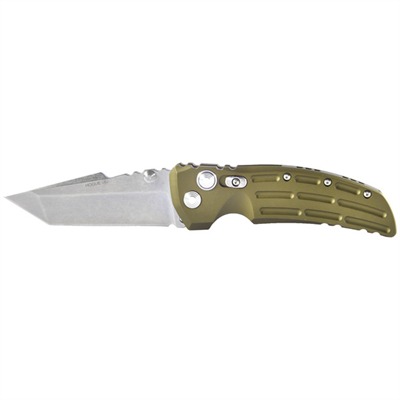
For a slash-cut, "more deadly" is the correctly placed deeper cut, and the deeper the cut the less accurate the slice needs to be. For a deeper-cut at the same distance from a target, the blade's reach just needs to be further into the target, i.e. a longer blade, the "deadly" slicing being accomplished with the furthest part of the edge into the target (i.e. the point) and the sharper (narrower with a more acute edge) the point the better the slice (easier passage through the material being cut), assuming negligible edge degradation during the cut. The "more deadly" edc slash-cutter (all other things being equal) is the longer blade or thinner tip, regardless of blade style. If you have a (western) tanto blade of equal length / tip-reach to a curved blade (drop-point, etc.), the one which presents more edge passing through the target during the slice is the one with the most obtuse angle formed from tip to belly, which could be either style. Actually, the winner here might be the Benchmade 940 "reverse-tanto"...
As for tip-strength, this again has less to do with blade-style and more to do with point-design: given equivalent steel-type and HT, the edge or tip with more metal behind it is more resistant to flex/facture, i.e. "stronger". There are western tanto-blades with thin tips and also some with thick "armor-piercing" tips where the edge-geometry at the tip is more obtuse than along the main belly... and so it is with many non-tanto blades where the taper from full-thickness to edge is more sudden at the tip (more obtuse angle) and more gradual along the belly. Either style can have strong a tip. Even a dagger can have a very strong tip and has the added benefit of a cutting edge instead of a spine, easing penetration.
One final note: curved vs straight blade stabbing - a curved blade can be more easily angled around barriers, including internal barriers like ribs, and will cut a wider passage. On a slice, the curve creates a natural path for the blade to continue moving when it encounters a substance it cannot cut through, e.g. bone, where a straight blade will impact and stick.
The curve also makes for easier withdraw from a stab on a moving target (or stationary target and moving attacker) - note the design of cavalry, scimitar, samurai swords, etc. Granted that is all swords

These are the main advantages I see to the western tanto, along with the second lower-point for shallow piercing at a lower angle - great for piecing and slicing tape/cardboard/plastic (cut-resistant material) above a delicate item.
The statement about stock-removal is excellent because it eases the manufacture of dual-grind blades - you can have a thin or even hollow-ground belly and a flat or convex second edge and stronger tip, or the reverse if you need a piercing tip and top-edge and a more robust belly. It also eases sharpening when no 'sweep' motion is involved



 My favorite part is the way they scowl at the camera after the cut!