Aaron
Can you go into detail about the Cerakote ?
Hey Count!
Sure!
The main equipment needed to apply Cerakote is:
* A sandblasting cabinet, with 100 grit or 120 grit aluminum oxide sand.
* An air compressor (needs to be pretty decent sized to run the blasting cabinet)
* HVLP spray gun with 0.8mm nozzle
* An oven for baking the blades at 250ºF, an old kitchen oven would probably work ok, bonus for convection.
* A GOOD respirator, you really don't want to breathe this stuff. I recommend combination Organic Vapor and P100 cartridges on a full-face respirator. Mine is a North 5400 series respirator.
* A very clean place to spray.
* A dessicant drier for your air-line when spraying, the small disposable ones work great:
http://www.mcmaster.com/#7793t1/=yh7gcz
* Graduated glass cylinders for mixing the paint
* Strainer for straining the mixed paint
* Large syringes to help dispense the paint from the bottle when mixing
* Polypropylene funnels for pouring paint (dollar store ones are fine)
* Nitrile disposable gloves for handling parts
* Wire for hanging parts (I use mechanics wire, very cheap and pliable)
* Acetone for cleaning the spray gun
* Neoprene disposable gloves for use with acetone when cleaning your spray gun (acetone eats nitrile gloves instantly)
* Really, really, good lighting.
I buy my Cerakote straight from NIC industries in the USA. They're pleasant to deal with and shipping isn't too bad. I bought my HVLP gun from them too, it's an Anest Iwata LPH-80 and seems like an excellent spray gun so far, here's the link:
http://www.cerakoteguncoatings.com/finishes/SE-138/iwata-spray-gun-kit-lph80/
They have a less expensive spray gun now, when I bought mine a month or so back they only sold the Iwata gun. Technically speaking you can use any HVLP gun with a 0.8mm nozzle, but I wanted to buy what they recommend to avoid issues.
I use the Graphite Black cerakote, and I mix it in a 19:1 ratio.
The coating overall is kind of fussy to apply. If you have any dust floating round your shop it will ruin the finish, if you have water in your air-lines it will ruin the finish. Same for dirty blasting media, incorrect blasting media, etc... It's important to nail everything down to get the finish you want. There's no opportunity to do touch-ups with this stuff, and you can't sand it or anything so it takes a bit of work to get it to go on right.
Application steps:
First the parts are finished to an appropriate grit by hand or on the grinder. 180 or 220 grit is fine, no need to go finer than that. Then the parts are degreased in Acetone for about 15 minutes. After this point it's important not to touch the blades with bare hands, nitrile gloves only from here on. Don't get any oil of any kind on the blade.
I then blast them with 120 grit sand at 90PSI. Make sure every bit of the blade has a matte finish after you're done. If there's any shinyness that part needs to be re-blasted. Good visibility into the blasting cabinet is a must.
The parts are then baked for 30 minutes or so at 250ºF to flash off any water or solvent left on them. If you see any 'wet patches' on the blade after the baking this indicates the presence of oil and the parts need to be degreased and baked again.
The parts should then be wired up using thin wire so you can handle them without touching them with your gloves!
You're now ready to paint!
I set my gun for about 15PSI (with the trigger down) and full airflow (the knob at the bottom of the gun). I then set it up so I'm spraying about a 3" wide fan at 6" away, and putting down quite a bit of paint.
I then hold the part up in front of the little spray booth I made and spray the hardest to reach parts first. The plunge line, the choil, then the butt of the knife, then the inside of the skeletonization, then the spine, then the edge, then the flats. I'll generally spray the spine and the flats twice each (two coats) as it's really, really, hard to tell when you've got full coverage.
The part should 'dry' after about 30 seconds or so. If it still looks wet after 40 seconds (tops) then you're applying the paint too thick.
The part should then be hung up for about 10 minutes to let all the solvents in the paint flash off before it goes in the oven.
Note: even though at this stage the paint will look dry, IT'S NOT! You absolutely cannot handle it or knock it at all before it's been baked, it will smudge and you'll have to strip the paint off and re-apply it.
Now the parts are ready to be baked! Bake them in the oven for 2 hours at 250ºF. My oven is pretty small so I 'flash cure' them in lots of 3 at a time for 15 minutes at 250ºF, after the flash cure they can be handled without marring the paint, which means I can pack them in tightly for one final long cure. I'm planning on getting a bigger oven soon!
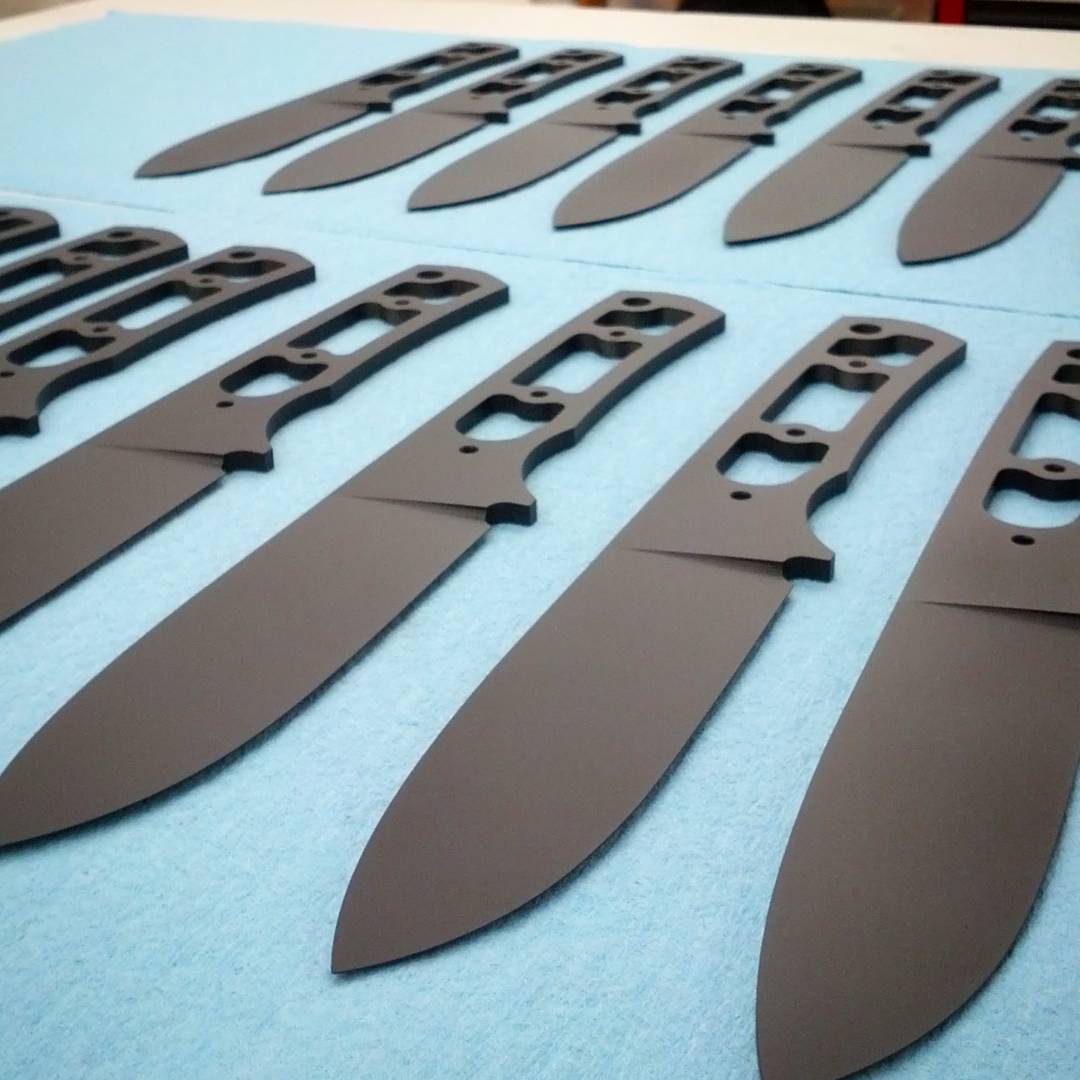
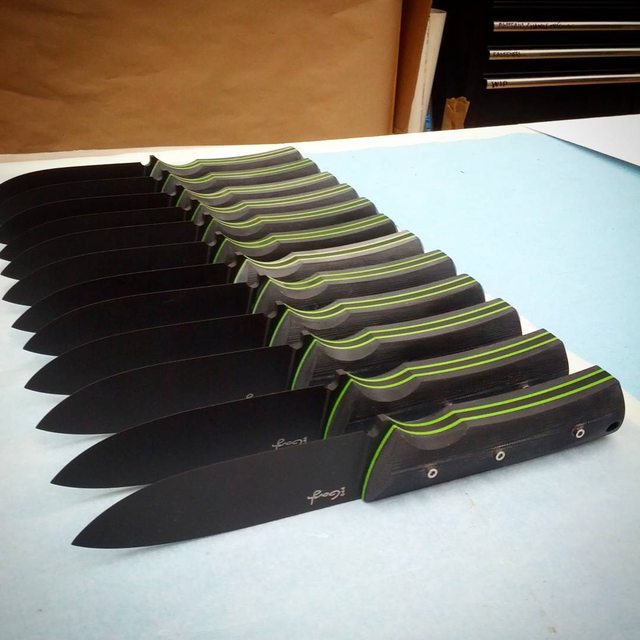
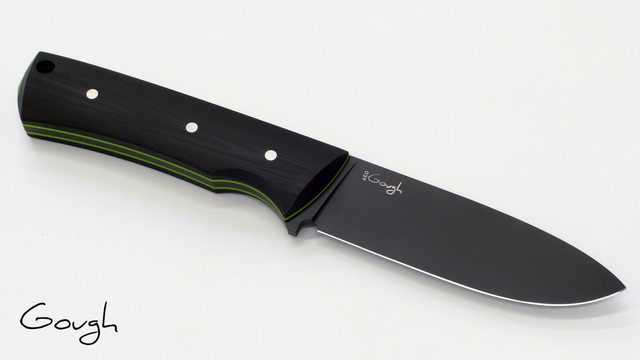
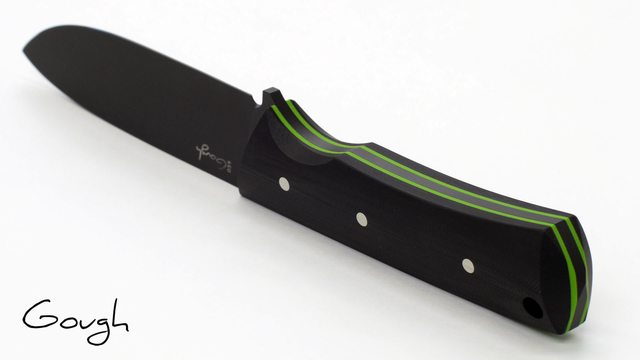
After that the results should look very much like 'black steel', rather than 'black paint'. The coating shouldn't have any visible 'thickness' to it, and should look more like DLC than paint.
At this point you're done! Make sure to clean the spray gun really well. Empty any excess paint, then put some acetone in the cup and spray it through, then disassemble the gun and clean the individual parts in a container of acetone.
The coating really is a bit fussy to apply, but the results are pretty awesome.
I don't get my blades 100% right every time. So far I'd say I have to re-coat at least 5-10% of the blades I spray, usually because of incomplete coverage.
Hope that's helpful mate!
-A